Friday, December 30, 2011

Is the Chimney Cap too Big or is the Chimney too Small

404532_10150455533261379_609921378_8795067_2046514314_n


Charlotte NC home inspector Preston Sandlin was performing a home inspection near Albemarle NC and he noticed a very curious thing; a chimney with a rain cap way too big.  After futher investigation he found that the rain cap obviously cam from another chimney that was way bigger than this one.  The problem with  this rather large rain cap is that it can actually impead the drafting process and migh actually lead to some back drafting which could result in carbon monoxide in the house.  This should be repaired to prevent this.

Preston Sandlin and Home Inspection Carolina have providing thorough quality home inspections in the Charlotte NC area for over 15 years.  Preston has a masters’ degree in Education and has taught Home Inspection classes for years.  He also is a certified infrared thermographer.  Home Inspection Carolina has  been on TV many times and has a Charlotte Home Inspector radio show .  So you are in need of a home inspection in Charlotte NC, Gastonia NC, Weddington NC, Mooresville NC, Fort Mill SC or Rock Hill SC call Home Inspection Carolina (704) 542-6575.


Preston Sandlin

Home Inspection Carolina

Ask the Charlotte Inspector


Thursday, December 22, 2011

Dryer Vent Safety

by Nick Gromicko, Rob London and Kenton Shepard

Clothes dryers evaporate the water from wet clothing by blowing hot air past them while they tumble inside a spinning drum. Heat is provided by an electrical heating element or gas burner. Some heavy garment loads can contain more than a gallon of water which, during the drying process, will become airborne water vapor and leave the dryer and home through an exhaust duct (more commonly known as a dryer vent).

A vent that exhausts moist air to the home exterior has a number of requirements:
  1. It should be connected. The connection is usually behind the dryer but may be beneath it. Look carefully to make sure it’s actually connected!
  2. It should not be restricted. Dryer vents are often made from flexible plastic or metal duct, which may be easily kinked or crushed where they exit the dryer and enter the wall or floor. This is often a problem since dryers tend to be tucked away into small areas with little room to work. Vent hardware is available which is designed to turn 90° in a limited space without restricting the flow of exhaust air. Restrictions should be noted in the inspector's report. Airflow restrictions are a potential fire hazard!
  3. One of the reasons that restrictions are a potential fire hazard is that, along with water vapor evaporated out of wet clothes, the exhaust stream carries lint – highly flammable particles of clothing made of cotton and polyester. Lint can accumulate in an exhaust duct, reducing the dryer’s ability to expel heated water vapor, which then accumulates as heat energy within the machine. As the dryer overheats, mechanical failures can trigger sparks, which can cause lint trapped in the dryer vent to burst into flames. This condition can cause the whole house to burst into flames! Fires generally originate within the dryer but spread by escaping through the ventilation duct, incinerating trapped lint, and following its path into the building wall.
InterNACHI believes that house fires caused by dryers are far more common than are generally believed, a fact that can be appreciated upon reviewing statistics from the National Fire Protection Agency. Fires caused by dryers in 2005 were responsible for approximately 13,775 house fires, 418 injuries, 15 deaths, and $196 million in property damage. Most of these incidents occur in residences and are the result of improper lint cleanup and maintenance. Fortunately, these fires are very easy to prevent.

The recommendations outlined below reflect International Residential Code (IRC) SECTION M1502 CLOTHES DRYER EXHAUST guidelines:

M1502.5 Duct construction.
Exhaust ducts shall be constructed of minimum 0.016-inch-thick (0.4 mm) rigid metal ducts, having smooth interior surfaces, with joints running in the direction of air flow. Exhaust ducts shall not be connected with sheet-metal screws or fastening means which extend into the duct.

This means that the flexible, ribbed vents used in the past should no longer be used. They should be noted as a potential fire hazard if observed during an inspection.
M1502.6 Duct length.
The maximum length of a clothes dryer exhaust duct shall not exceed 25 feet (7,620 mm) from the dryer location to the wall or roof termination. The maximum length of the duct shall be reduced 2.5 feet (762 mm) for each 45-degree (0.8 rad) bend, and 5 feet (1,524 mm) for each 90-degree (1.6 rad) bend. The maximum length of the exhaust duct does not include the transition duct.
This means that vents should also be as straight as possible and cannot be longer than 25 feet. Any 90-degree turns in the vent reduce this 25-foot number by 5 feet, since these turns restrict airflow.

A couple of exceptions exist:
  1. The IRC will defer to the manufacturer’s instruction, so if the manufacturer’s recommendation permits a longer exhaust vent, that’s acceptable. An inspector probably won’t have the manufacturer’s recommendations, and even if they do, confirming compliance with them exceeds the scope of a General Home Inspection.
  2. The IRC will allow large radius bends to be installed to reduce restrictions at turns, but confirming compliance requires performing engineering calculation in accordance with the ASHRAE Fundamentals Handbook, which definitely lies beyond the scope of a General Home Inspection!
M1502.2 Duct termination.
Exhaust ducts shall terminate on the outside of the building or shall be in accordance with the dryer manufacturer’s installation instructions. Exhaust ducts shall terminate not less than 3 feet (914 mm) in any direction from openings into buildings. Exhaust duct terminations shall be equipped with a backdraft damper. Screens shall not be installed at the duct termination.
Inspectors will see many dryer vents terminate in crawlspaces or attics where they deposit moisture, which can encourage the growth of mold, wood decay, or other material problems. Sometimes they will terminate just beneath attic ventilators. This is a defective installation. They must terminate at the exterior and away from a door or window! Also, screens may be present at the duct termination and can accumulate lint and should be noted as improper. 
M1502.3 Duct size.
The diameter of the exhaust duct shall be as required by the clothes dryer’s listing and the manufacturer’s installation instructions.
Look for the exhaust duct size on the data plate.
M1502.4 Transition ducts.
Transition ducts shall not be concealed within construction. Flexible transition ducts used to connect the dryer to the exhaust duct system shall be limited to single lengths not to exceed 8 feet (2438 mm), and shall be listed and labeled in accordance with UL 2158A.
In general, an inspector will not know specific manufacturer’s recommendations or local applicable codes and will not be able to confirm the dryer vent's compliance to them, but will be able to point out issues that may need to be corrected

Buying a Foreclosure

Buying a Foreclosure

by Nick Gromicko and Rob London

Purchasing foreclosed homes in desirable areas at below-market values can be a sound investment strategy. Appreciation on their original prices may be tax-free.  Buying foreclosed rental properties can provide positive cash flow, as well as valuable tax deductions. On the other hand, buying a foreclosure involves homework, patience, and a certain amount of luck. For those wishing to get a bargain house through the foreclosure process, it’s best to learn the basics.Foreclosed homes are often sold at auction

Four Ways to Buy a Foreclosed Home

  • presale is when the prospective buyer negotiates with the current owner before the house is foreclosed upon. Presale discounts can be considerable, but communicating and reasoning with the owner isn’t always easy; they might have legal problems, lost their phone service or electricity, or greet you with suspicion, having already been hounded and threatened by creditors. And after time and energy have been invested, the deal can fall through if the owner comes up with the money to repay their debt, or for any number of unexpected reasons. With persistence, however, the seasoned real estate investor can profit from presales. To find out about presales, you can try one of the following avenues:
    • Ask your local county court how to search new notices of default.
    • Find out if the County Recorder has data available online.
    • Look in the "legal notices" section of the newspaper for properties that are coming up for sale at public auction. Take note of the address, the property owner’s name, the tax ID, and whatever other information is contained in the ad.
  • A foreclosed home may be sold at a public auction, in which buyers can expect a discount of 10% to 25% of market value. Interested bidders are generally required to show proof of financing, and must have a minimum cash deposit before they are qualified to bid. It might be impossible to gain entry to inspect the interior, too, which makes this type of purchase risky. The local building department may have permit records that can clue you in to the building’s layout and appearance.
  • A real estate-owned (REO) sale is a transaction where a foreclosed house is purchased directly from the bank. These properties typically wound up in the bank’s portfolio after failing to sell at auction. REO investments are relatively safe, as there are no tenants to evict or hidden liens and, unlike properties sold at public auction, buyers can usually receive a mortgage to pay for them. And purchasers might even get an unused house; the slow economy has left many builders at the end of their construction-loan periods without finding buyers for the homes, in which case the bank will foreclose on the brand new homes. Unfortunately, REOs are usually offered at near-market prices to recoup the costs of property taxes, maintenance and legal fees. To find REOs, try the following:
    • Check lenders’ websites, as they may have a list of their REOs, along with contact information for the appropriate real estate agent.
    • Call lenders and ask to speak to someone who handles their foreclosures.
    • Check newspapers.
  • The Department of Housing and Urban Development has tens of thousands of HUD homes whose previous owners defaulted on federally issued loans. After a period during which local governments gain exclusive buying privileges, they become available to individual buyers who pledge to live in the property. After another 10 days, investors may bid on the property. It’s difficult to make a profit on these houses, as HUD releases them at near-market values.

Tips for Foreclosure Purchases

  • Invest time in research and preparation. Those new to the field should spend some time learning the variables of foreclosure investing before making any purchases.
  • Budget carefully to prepare for the unexpected. The house may require unforeseen repairs, such as a leaky roof or unstable deck. The price tag of the home itself is often just the first of a series of fees. What if you planned on rental cash flow to cover the mortgage, but you can’t find a tenant?
  • Avoid buying a foreclosure sight-unseen. Try to see the house yourself before buying it, or hire someone to evaluate at it in your absence. Distant investors are buying up properties unseen in bulk, and they’re often unpleasantly surprised at how much they’ve been misled.
  • Evaluate the neighborhood. If the foreclosure is rife with problems, but it’s in a desirable area with high property resale values, it may still be worth it to make a low offer. An area with several foreclosures or a high crime rate can undermine an otherwise good deal, however.
  • Consider how long the house has been vacant. Building damage – and the costs required to make the house livable - generally increases with the time that has lapsed since the last tenant vacated. Pests are a particular issue in houses that have been empty for a long time, and plumbing defects and leaks increase in likelihood in such homes, as well.
  • Examine the landscaping. Left unchecked, trees can send their roots into the foundation, and vines can creep into the windows.
  • Has the house been professionally inspected by an InterNACHI inspector? Foreclosures can be notorious for damage suffered at the hands of past tenants, through both inadvertent and intentional vandalism and theft.


In summary, there are a number of ways to go about buying a foreclosed home, and buyers should exercise patience, persistence and careful planning before buying foreclosed properties.

Electrical Panel Inspections

 Electrical panels are boxes that house circuit breakers, which are are safety devices that stop the electrical current if it exceeds the safe level for some portion of the home electrical system.

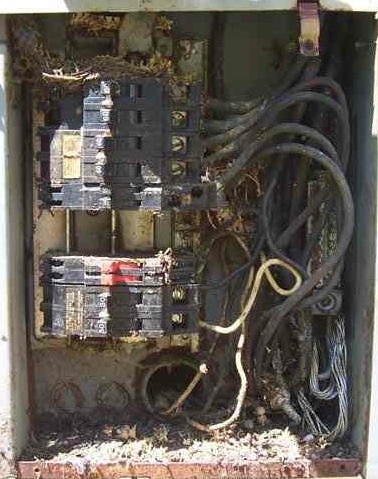
  An unfortunate snake entered this serice panel and was electrocuted. The resulting mess may make the components defective.
Safety 


Many people, even experienced electricians, have been killed or seriously injured while opening electrical panels. In 1991, an Atlanta electrician was killed while attempting to inspect a panel that had a faulty spring-loaded bus-bar assembly. Apparently, the bus-bar was moved while the electrician was opening the panel, causing an arc and a lethal electrical explosion. Generally, two factors contribute to these situations:  defective components and complacency.

Inspectors must be aware that all forms of electrical inspections, especially electrical panel inspections, are inherently dangerous. Practice calm, steady movements and learn to avoid distractions. A sudden flash, shout or movement could cause an inspector to lunge and touch an electrically live and dangerous component. Advise your client that they should never remove an electrical panel cover themselves, as they should leave this duty to InterNACHI inspectors or qualified electricians. Before touching the electrical panel, inspectors should ask themselves the following questions:
  • Do I have an escape path? Make sure that you know where you can safely turn or step if you must safely escape a dangerous surprise, such as bees or sparks. An unfortunately placed shovel or extension cord, for instance, can turn a quick jerk into a dangerous fall.
  • Are the floors wet? Never touch any electrical equipment while standing on a wet surface!
  • Does the panel appear to be wet? Check overhead for dripping water that has condensed on a cold water pipe. Moisture can arrive in more ways than you can imagine.
  • Is the panel rusty? Rust is an indication of previous wet conditions that may still exist.

As an optional safety measure, use a voltage ticker to make sure the box is safe to touch. If the alarm sounds on the device, have the box examined by a qualified electrician. Also, safety glasses and other personal protective equipment may be used to protect against burns and electric shock.

While removing the panel cover, inspectors should:

  • Stand a little back while removing the cover, which makes it easier to remain in a blocking position.
  • Stand so as to block your client from touching the panel and its components.
  • inform the client that opening the panel is a dangerous step, and that if sparks fly, the client should not touch the inspector.

Service Panel Inspection

Inspectors can check for the following defective conditions during an electrical panel inspection:

  • insufficient clearance. According to the 2008 National Electrical Code, most residential electrical panels require at least a 3-foot clearance or working space in front, 30 inches of width, and a minimum headroom clearance of 6 feet, or the height of the equipment, Zinsco panels are believed by many experts to be defectivewhichever is greater. If obstacles would make it unsafe for you to inspect the service panel, you have the right to disclaim it.
  • aluminum branch wiring.
  • sharp-tipped panel box screws or wires damaged by these screws. Panel box cover screws must have blunt ends so they do not pierce the wires inside the box. Look for wires that pass too closely to the screw openings inside the electrical panel. 
  • circuit breakers that are not properly sized.
  • oxidation or corrosion to any of the parts. Oxidized or corroded wires will increase the resistance of conductors and create the potential for arcing. 
  • damage caused by rodents. Rodents have been known to chew through wire insulation in electrical panels (and other areas), creating an unsafe condition. Rodents have been electrocuted this way, leaving an unsightly mess inside the panel.
  • evidence of electrical failures, such as burned or overheated components.
  • evidence of water entry inside the electrical panel. Moisture can corrode circuit breakers so that they won't trip, make connections less reliable, and make the equipment unsafe to touch.
  • evidence of missing or improper bonding.  This may indicate improper wiring, damaged equipment or unsafe conditions.
  • the physical contact points of the overcurrent protection device to the contact point of the buss are not making good contact. The sounds of arcing (a cracking or popping sound) may indicate this condition.
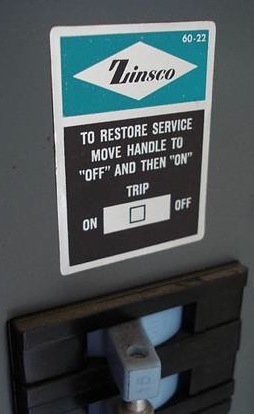
  • panel manufactured by Zinsco or Federal Pacific Electric (FPE). These panels have a reputation for being problematic and further evaluation by a qualified electrician is recommended. Zinsco panels can generally be identified by a blue and silver "Zinsco" label inside the panel, and an embossed "Magnetrip" label at the top of the panel face. FPE panels should include, if they were not removed, one of the following identifying labels:
  •  
    • Federal Electric
    • Federal Pacific Electric
    • Federal NOARC
    • Federal Pioneer
    • FPE
    • FPE-Stab-Lok
    • Stab-Lok 

In summary, electrical panels are potentially dangerous and should be inspected with care.

Wednesday, December 21, 2011

Termites Found in Attic During Charlotte Home Inspection

9922_spring_haven_report3

Charlotte NC home inspector Patrick Waddell of Home Inspection Carolina was inspection a home Tuesday afternoon when he pulled some insulation back in the attic and found termites.  Now it is important to now that termites come from the ground and have to return to the ground for moisture.  This means they usually eat what's closest to them first.  If these termites found on this Charlotte NC home inspection were found int the attic you can bank on there being damage all the way up the wall that is probabaly hidden. 

If you need home inspection information or you are in need of a great home inspector in the Charlotte, Huntersville, Concord, Fort Mill or Rock Hill areas contact Home Inspection Carolina.  They have performed over 23,432 home inspection and will not let you buy the money pit.  We have over 100 years of combined home inspection and construction experience.  Please give us a call (704) 542-6575


Preston Sandlin

Home Inspection Carolina

Ask the Charlotte Inspector


Charlotte Home Inspector Can't Bear It

9922_spring_haven_report1

Charlotte NC home inspector Patrick Waddell of Home Inspection Carolina was perform a home inspection just before Christmas when he noticed the the floor was buckling and bowing.  When he went underneath the house he found out why.  The girder was not properly supporting the house as you can see from this phot.  This will have to be repaired as the structural integrity of the home has now been compromised.

If you need home inspection information or you are in need of a great home inspector in the Charlotte, Huntersville, Concord, Fort Mill or Rock Hill areas contact Home Inspection Carolina.  They have performed over 23,432 home inspection and will not let you buy the money pit.  We have over 100 years of combined home inspection and construction experience.  Please give us a call (704) 542-6575


Preston Sandlin

Home Inspection Carolina

Ask the Charlotte Inspector


Monday, December 5, 2011

Is Something Missing Here

420_able_road3

Charlotte home inspector Preston Sandlin was inspecting a home in Dilworth when he went out on the back porch and noticed something peculier.  Do you notice something odd about this light?  It seems like something is missing here doesn't it?  It's the ceiling fan.  The blades are missing.  When you pull the chain, it starts spinning but nothing happens.  If you are moving to Dilworth, or any of the other Charlotte Neighborhoods and you want a thorough home inspection give Home Inspection Carolina a call. 

Preston Sandlin and Home Inspection Carolina have providing thorough quality home inspections in the Charlotte NC area for over 15 years.  Preston has a masters’ degree in Education and has taught Home Inspection classes for years.  He also is a certified infrared thermographer.  Home Inspection Carolina has  been on TV many times and has a Charlotte Home Inspector radio show .  So you are in need of a home inspection in Charlotte NC, Gastonia NC, Weddington NC, Mooresville NC, Fort Mill SC or Rock Hill SC call Home Inspection Carolina (704) 542-6575.


Preston Sandlin

Home Inspection Carolina

Ask the Charlotte Inspector


Home Inspection Carolina

10023 Zackery Ave

Charlotte NC 28277

(704) 542-6575

Saturday, December 3, 2011

Charlotte NC Home Inspector Finds Many Electrical Problems

106_0580

Home Inspection Carolina inspector Preston Sandlin was inspecting a home in Mooresville NC when he cam across this electrical panel with a myraid of electrical problems including PVC being used as electrical conduit.  The mast head is actually up in the attic and the line going to it is loose.  There are many electrical problem here that will need to be fixed.

Home Inspection Carolina inspects homes in Charlotte NC, Mooresville NC, Weddington NC Gastonia NC and Belmont NC,  They perform home inspections, termite inspections, radon testing, infrared scanning, and carbon monoxide testing.  If you are buying a home in these areas please keep the over 100 years of combined home inspection and contruction experience of Home Inspection Carolina to work for you.  Give Home Inspection Carolina a call today (704) 542-6575.